
5 mistakes when choosing needles in PMU – and how to avoid them
Susann Herdegen
Excellent results in permanent makeup don’t depend solely on technique and experience. Choosing the right needle plays a crucial role.
Perfect results in permanent makeup do not depend solely on technique and experience. The choice of the right needle plays a key role. It determines how clean the lines will be, how soft the shading will look, and how the skin will heal after the treatment. Many artists underestimate this factor and are surprised when the results are uneven or the healing process becomes difficult. In this article, I will present the five most common mistakes when choosing needles – and how to avoid them.
MISTAKE #1: Incorrect configuration and size
One of the most common mistakes is choosing the wrong needle configuration. Someone who uses a needle that is too large for delicate hairstrokes or too small for soft powder shading will not achieve a clean result. The basic rule is: The more precise the goal, the smaller the diameter and the longer the taper.
• For example, for delicate hairstrokes or precise outlines, the KWADRON® PMU Optima 18/1RLLT (0.18 mm, Long Taper) is ideal. This extremely thin needle allows for very precise lines, for example for Nanobrows or fine eyeliner strokes.
• For brow or lip contours I recommend the Optima 25/1RLLT (0.25 mm, Long Taper), which combines stability with precise line handling.
• When it comes to brow work such as Powderbrows, a shading-type configuration is a good choice. Optima 25/3RSPT-T or Optima 30/3RSPT are ideal for soft, powdery effects, while Optima 30/7RSPT provides even pigment distribution for shading larger areas.
It is important to understand: the size of the needle depends on how precise the line should be or how fluffy the shading should look. On the other hand, the choice must also be adjusted to the skin structure. On thicker, firmer skin, a thicker needle is usually used, whereas on thin, delicate skin a thinner needle is used. This means you must not ignore the fact that you need to consider not only the result you want to achieve, but also the skin in which this result is to be achieved.
MISTAKE #2: Incorrect depth, angle, and speed
Another problem arises when the working parameters do not match the needle. Working too deep causes trauma and pigment blow-outs; working too shallow results in poor pigment retention.
• The correct working angle is crucial: for the most delicate hairstrokes, the needle is held as vertically as possible, while for shading we work at a slightly smaller angle, with controlled, calm hand movement.
• Machine speed must also be adjusted to the needle. Thin needles such as 18/1RLLT work better at higher machine speeds combined with slow, controlled hand movement. This creates uniform pixels instead of unclear scratches.
• It is also important to create clean and delicate transitions instead of overworking the skin with too many passes.
MISTAKE #3: Neglecting hygiene
Hygiene in PMU is obvious, but the differences between needle systems are often underestimated. Cartridges without an integrated safety membrane carry the risk of fluids flowing back, which can lead to cross-contamination. Kwadron uses a unique system that stabilizes the needles while using a complete membrane.
• Optima cartridges are also made from medical-grade plastic, which minimizes friction between the needle and the housing. This ensures quieter work and more even pigment distribution.
• Before each treatment, it is essential to check whether the blister packaging is intact and the sterile seal is untouched.
For me, quality begins with hygiene. And hygiene means not only the artist’s personal cleanliness, order and disinfection in the workplace, or hygiene in direct contact with the client. It also always includes choosing hygienic and high-quality products — because only in this way can we consistently achieve safe, reliable, and first-class results.
MISTAKE #4: Not adjusting to skin type and area
Not every skin reacts the same, and that is why adjusting needle choice is so important.
• For mature or highly sensitive skin, work technique and depth control are crucial. Optima 18/1RLLT may work with an exceptionally light, precise technique — thanks to its long taper it enters the skin very smoothly — yet not every skin will respond to such a thin needle in the same way. In many cases, more stable diameters will be safer. Always choose the cartridge according to the skin’s elasticity and the way you guide your hand.
• For normal to oily skin, the needle can be slightly more stable. For Powderbrows on oily skin, Optima 25/3RSPT-T or Optima 30/5RSPT-T work very well because they allow for even pigment distribution while maintaining soft transitions.
In addition to needle selection, machine speed also plays a key role.
• As a rule: on sensitive skin you work slower; on more resilient skin you can slightly increase the speed.
• However, you must not forget that machine speed is always related to the pendulum movement (hand speed). Every hand moves differently — which is why regular practice on artificial skin and experimenting with different speeds is essential. This way you will find the settings that match your natural rhythm.
• It is equally important to adjust your hand speed to the skin. This means: there are many factors that interplay — skin texture, needle configuration, hand movement, and machine settings. Only those who consciously coordinate all these elements can reliably achieve beautiful and even results.
MISTAKE #5: Stagnation
A frequently underestimated mistake is limiting yourself to only one needle configuration and not regularly adjusting your technique and speed to different skin types or new requirements. This can lead to suboptimal results in some cases — despite having a good needle. Lack of practice on artificial skin also significantly hinders progress.
For me, professionalism means continuous improvement: reflecting on whether to use different needles in one treatment and when to change them — and constant practice to improve hand control, speed, and technique.
Using multiple needles in one treatment – when does it make sense?
Example: In the Nanobrows hairstroke technique, the first pass can be done with a 1-Round Liner needle to create precise strokes. Then you can switch to a wider needle or a multi-needle configuration, such as a Flat 3F needle (e.g., Optima 35/4FLPT or an Optima 3F-Flat configuration) — for faster work and less skin irritation, because you don’t need to perform many individual strokes. This combines precision in detail with efficiency during filling.
Practicing on artificial skin – why is it important?
Even the best artist can improve — but this requires regular practice. Many mistakes arise because certain hand movements, the pendulum motion, or coordination with the machine were not consciously practiced.
• Practicing on artificial skin means simulating tests with different needles, different speeds, and different skin textures. Try, for example, a thin RL needle first, and then a Flat or Shader configuration to feel how the machine responds and what effect your hand movement produces.
• Consciously pay attention to your pendulum speed and how it changes depending on the skin — this affects how deep you automatically puncture, how fast the pigment flows, and how traumatic the treatment is.
Therefore, my final advice: Be curious and flexible. Question your standard needle choice: Which needle could I additionally use? When is it worth switching? Practice regularly — not on clients, but on artificial skin. This will help you develop a better sense of speed, hand movement, and how to protect the skin while maximizing results. Only those who continue to grow can bring out the best in every treatment — both for themselves as an artist and for every client.
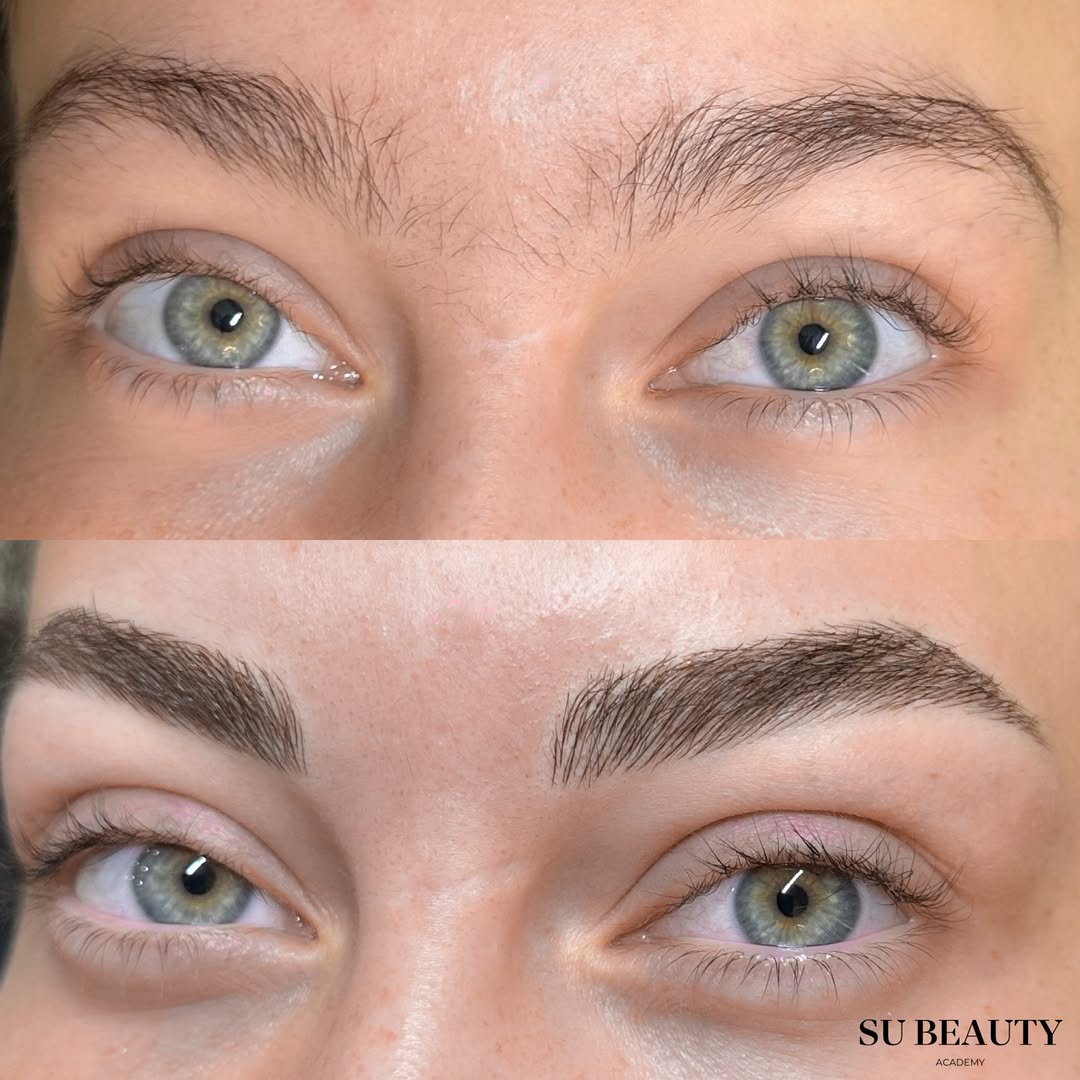
Fot. 1 IG: @beautybysu
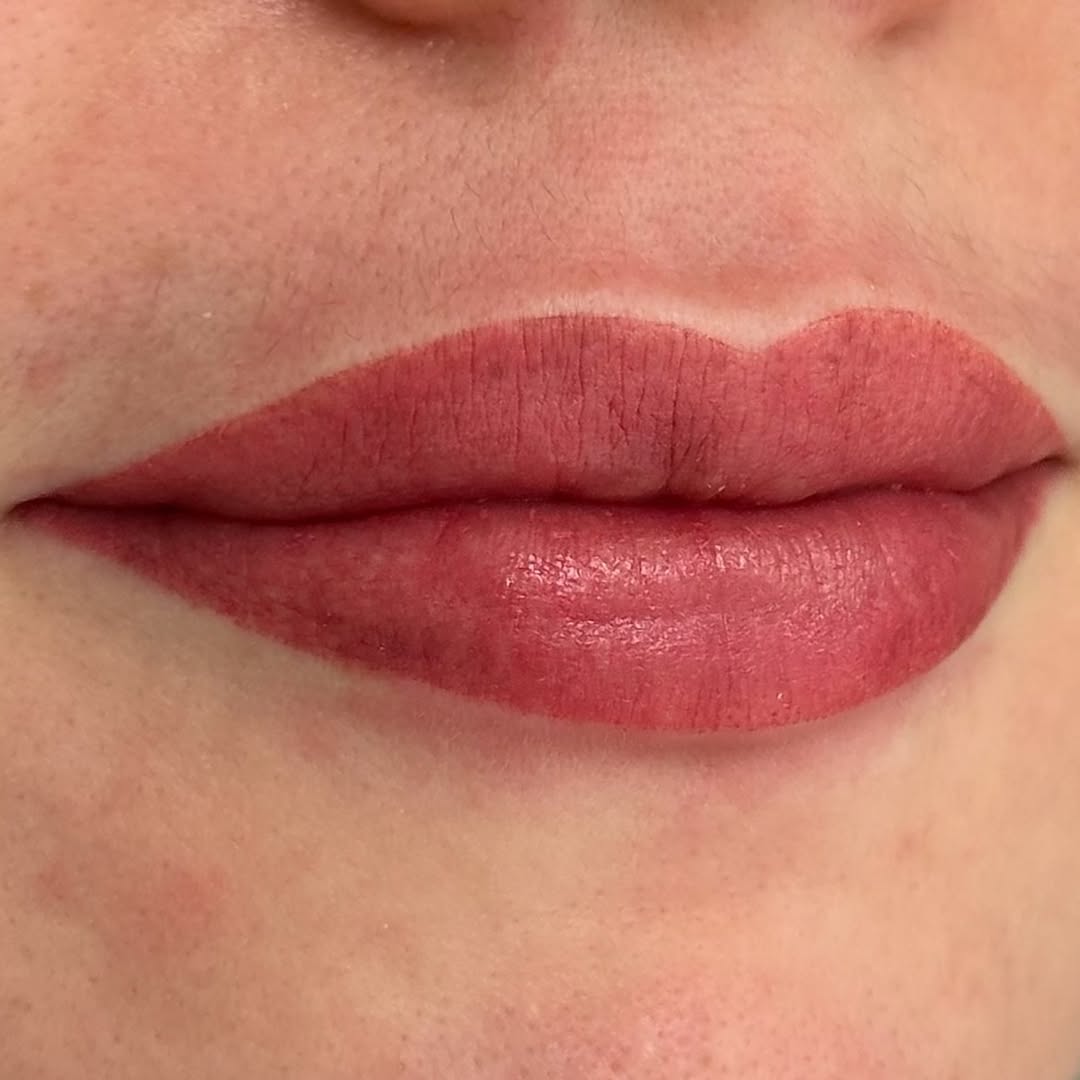
Fot. 2 IG: @beautybysu
--------------------------------------------------------------------------------------------------------
Susann Herdegen
FOUNDER & CEO OF SU BEAUTY | FOUNDER OF SU BEAUTY ACADEMY | CREATOR OF SU SKIN (Clean Beauty) | CEO OF ÊTRE VU AGENCY | INTERNATIONAL SPEAKER & INDUSTRY MENTOR
Susann Herdegen began her journey in beauty at the age of 19. In 2015, she opened “SU BEAUTY” in the center of Bonn, and since then she has been running one of the most recognizable salons in the region. She specializes in pigmentation and has completed over 20,000 microbladings.
She runs the SU BEAUTY ACADEMY, where she trains hundreds of students in microblading, PMU, lash & brow lifting, and cosmetic treatments, including bio-microneedling. She maintains constant contact with her community and supports her students at every stage.
She created her own skincare brand, SU SKIN — vegan clean-beauty products manufactured in Germany. She is also the founder of the skincare congress SKINFERENCE.
Within the industry, she is a well-known expert: she speaks at conferences, serves on juries, supports young talents, offers branding and marketing coaching, and through her agency ÊTRE VU she helps women build their own brands.
She was also a television expert on the VOX show “Makel?Los!”.
Her mission: to support women, share knowledge, and nurture passion for beauty professions.